
Why Do Bad Endings Feel More Honest Than Happy Ones?
Why do tragic and unresolved endings feel so honest? Explore emotional realism,literary tragedy,ambiguous endings,and our need for closure in fiction.
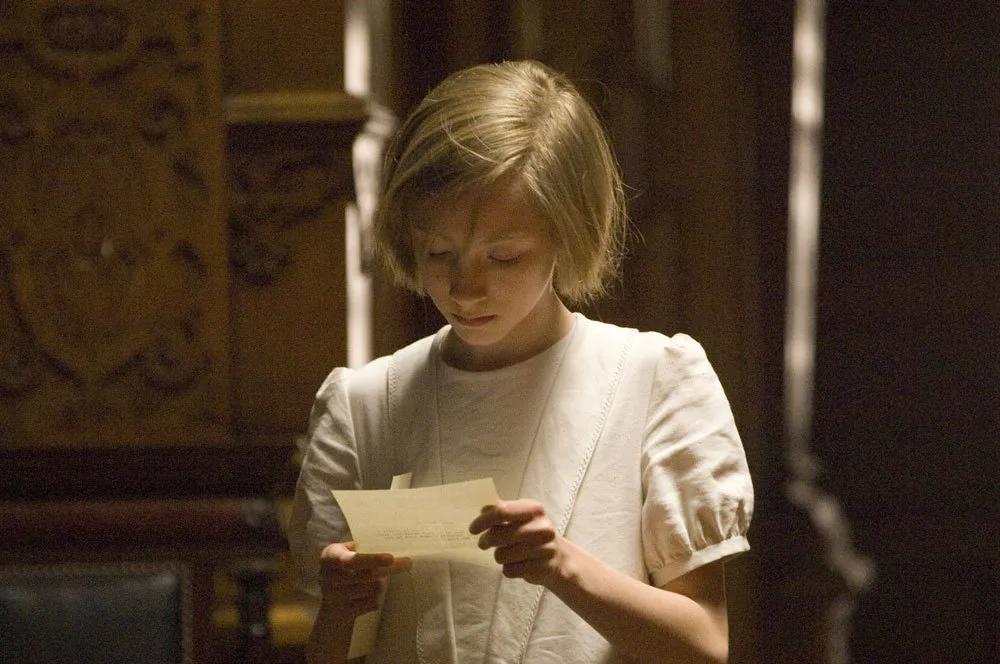
We are used to stories that take us somewhere. A conflict is introduced, characters struggle to overcome it, and eventually something changes. The truth comes out, the lovers reunite, the guilty are punished, or the protagonist finally gets what they deserve. Even when a story puts its characters through terrible things, we often expect those experiences to lead somewhere meaningful. We want the suffering to count for something. But some stories end by refusing to give us what we have been waiting for. Two people never find their way back to each other. Someone makes the right decision and still loses everything. A character reaches the end of their life only to realise how much of it they have spent avoiding the things that mattered most. Instead of tying everything together, the ending leaves us with something we cannot quite put away.
It is tempting to explain this by saying that sad endings are simply more realistic. After all, life does not always work out, and not everyone gets a second chance. Yet a tragic ending can be just as artificial as a happy one if the story has done nothing to earn it. What makes certain unhappy endings so affecting is not the suffering itself, but the way they allow difficult truths to remain difficult. They do not insist that loss must lead to growth, that love must be enough, or that everything will eventually make sense. Perhaps the most honest stories are not necessarily the ones that end badly. They are the ones that understand why an ending cannot always make everything right.
Real Life Doesn't Always Give Us Closure
Stories often make endings look like moments of understanding. Characters finally say what they have been holding back, secrets come to light, and misunderstandings are resolved. Even when the outcome is painful, there is usually some satisfaction in knowing what happened and why. The story has brought us to a point where we can look back and understand how everything fits together. Real life rarely offers the same convenience. Relationships end without a final conversation. People leave without explaining themselves, and sometimes the explanations we eventually receive only create new questions. We can spend years trying to understand a decision someone made in a moment, or wondering whether a different response might have changed what followed. Even when we finally understand why something happened, that understanding does not necessarily make it easier to live with.
This is one reason unresolved endings can feel so familiar. They resemble the way we actually experience the past, returning to certain moments without ever finding an interpretation that settles everything. We may recognise what went wrong in a relationship without understanding why we still miss the person. We may accept that a decision was necessary while continuing to regret its consequences. Understanding and acceptance do not always arrive together. An ambiguous ending can preserve these contradictions instead of forcing them into a neat conclusion. The reader is left with enough information to recognise what has changed, but not necessarily enough to decide exactly what it all means.
Of course, there is a difference between leaving a story open and leaving it unfinished. An ending that withholds information can be effective when the unanswered question grows naturally out of the characters and their circumstances. The reader should have something to think about beyond the simple fact that the story has stopped. A deliberately unresolved ending still changes the way we understand what came before. It may reveal that a character has misunderstood their own life, leave us uncertain about the consequences of a decision, or force us to reconsider whether the outcome we wanted was ever possible. An underdeveloped ending, by contrast, leaves questions unanswered without giving us much reason to care about the answers. The distinction matters because uncertainty alone does not create depth. What makes an unresolved ending memorable is the feeling that something important has been left beyond our reach, not that the writer has simply withheld the information we need.
The Comfort of Happy Endings and Why They Sometimes Feel False
Happy endings have a particular appeal because they give suffering a destination. The obstacles characters face are eventually overcome, difficult choices lead somewhere, and the pain that seemed unbearable begins to look like part of a larger journey. In romantic comedies, misunderstandings are cleared up, and people finally admit how they feel. In fairy tales, goodness is rewarded, and the threat to the established order is defeated. The ending allows us to put down the story with the sense that things have reached a place where they can remain. There is nothing inherently dishonest about this kind of resolution. Hope can be as truthful as despair, and stories that imagine a better outcome can help us recognise possibilities that ordinary life makes difficult to see. A happy ending can be particularly satisfying when a character has had to confront their own mistakes, change their behaviour, or make a difficult sacrifice to reach it.
The problem begins when the ending asks us to forget what the story has spent its time showing us. Imagine a novel in which two characters repeatedly hurt one another, avoid responsibility, and mistake possessiveness for affection. If they suddenly reconcile in the final pages, with no indication that anything between them has changed, the reunion may feel less like a resolution than an interruption. We are expected to celebrate a relationship that the story itself has given us reason to distrust.
The same problem occurs when injustice is resolved too conveniently, grief disappears once a character learns a lesson, or a lifetime of conflict is settled by a single conversation. Such endings can make difficult experiences look simpler than they are. They offer emotional relief, but that relief comes at the expense of everything that made the conflict meaningful. What matters is not whether a story ends happily, but whether the ending follows from what its characters have actually experienced. Reconciliation can be moving when people have confronted the reasons they hurt one another. Justice can be satisfying when the story has made us believe that change is possible. Even an unlikely coincidence can work if it belongs to the kind of story being told. A hopeful ending does not need to imitate real life in every detail. It simply needs to remain faithful to the world the story has created. When it does, happiness feels earned. When it does not, we may find ourselves questioning the ending precisely because we wanted to believe in it.
Why Painful Endings Can Feel More Emotionally Honest
Sad endings often leave us with a sense that something has been recognised rather than resolved. They acknowledge that a person can do everything they know how to do and still fail, that love does not guarantee compatibility, and that some mistakes cannot be undone. These are not necessarily more profound truths than the ones offered by hopeful stories, but they are difficult to accommodate within a narrative that expects everything to lead towards improvement.
F. Scott Fitzgerald's The Great Gatsby offers a particularly striking example. Gatsby spends years trying to recover a past that he has transformed into an ideal. His dream is not simply to be with Daisy again; it is to return to a version of his life in which the future still seems capable of becoming everything he imagined. He believes that enough money, persistence, and determination can overcome the years that have passed. His tragedy lies partly in his refusal to recognise the limits of that belief. Daisy is a real person, with her own fears and loyalties, but Gatsby's dream requires her to become something more: proof that the past can be restored exactly as he remembers it. The novel's ending offers no reassuring reward for his devotion. His death and the indifference that follows expose the distance between the life he imagined and the world he inhabited.
What makes the ending so affecting is that Gatsby's hope is both beautiful and destructive. His capacity to believe in something beyond his present circumstances gives him a certain grandeur, but it also prevents him from seeing what his dream demands of other people. The novel does not simply punish him for wanting too much. It asks what happens when the desire to recover an ideal becomes more powerful than the ability to accept reality.
Ian McEwan's Atonement approaches the problem of an unhappy ending from a different direction. The novel's revelation that Briony has invented a happy reunion for Cecilia and Robbie transforms the meaning of the story we have been reading. The lovers do not receive the future that the narrative initially seems to offer them. The reunion exists only in Briony's account, a final attempt to give them something that reality denied.
Her decision is heartbreaking because it is understandable. She cannot undo the damage she caused, and fiction becomes the one place where she can imagine a different outcome. Yet the imagined ending cannot restore the lives that were lost. Her storytelling can acknowledge her guilt and offer a kind of symbolic compensation, but it cannot become an act of actual repair.
The novel therefore complicates the comfort that fiction usually provides. Stories can give shape to suffering, and they can allow us to imagine the justice we wish had occurred. But imagining a better outcome is not the same as changing what happened. The ending forces us to sit with that difference, even as it reveals why Briony needs to tell the story in the first place. Both novels are tragic, but neither relies on sadness alone to create its effect. Their endings grow out of the central conflicts of the stories: Gatsby's desire to reconstruct the past and Briony's attempt to make amends for a past she cannot change. The pain comes from seeing those desires clearly and recognising that neither can deliver what its character wants most.
The Stories We Cannot Finish Interpreting
Not every memorable ending involves a death, a betrayal, or a dramatic revelation. Sometimes the most affecting conclusions are quiet enough that we only begin to understand them after the story is over. Instead of giving us one final event that explains everything, they leave us with a character whose understanding of their life has changed, even if that change comes too late to alter anything. Kazuo Ishiguro's The Remains of the Day is a particularly effective example. Stevens, an aging butler, looks back on his years of professional service and the choices he made in the name of duty. For much of his life, he has treated emotional restraint as a form of dignity. He has devoted himself to his work, placed his employer's interests above his own judgment, and avoided acknowledging feelings that might interfere with the role he has chosen for himself.
As the novel progresses, the distance between Stevens's understanding of his life and the reader's understanding of it becomes increasingly painful. His recollections reveal moments in which personal attachments and moral questions were pushed aside because he believed that a good butler should remain composed and loyal. What he presents as professionalism often appears to the reader as a way of avoiding responsibility for his own choices. The tragedy is not that Stevens suddenly discovers he has lived a meaningless life. It is that he begins to recognise what his chosen way of living has cost him, without being able to return to the moments when he might have acted differently. His feelings for Miss Kenton, in particular, remain entangled with the years they spent together and the opportunities neither of them fully pursued.
The novel does not need a dramatic confession to make this loss felt. Stevens's restrained reflections are themselves part of the problem: even when he approaches the truth, he struggles to express it directly. His manner of speaking reveals how deeply he has internalised the very habits that have kept him from confronting his regrets. The ending offers a degree of acceptance, but not the kind that makes everything right. Stevens turns towards what remains of his life, yet the future cannot restore the opportunities he allowed to pass. His decision to continue is neither a triumphant recovery nor complete defeat. It is a small movement forward made in the knowledge that some things cannot be recovered.
That uncertainty is what allows the novel to linger. We can interpret Stevens's ending as a belated recognition of his own mistakes, an attempt to make peace with his limitations, or even another instance of his retreat into familiar routines. These readings are not necessarily mutually exclusive. The novel gives us enough to understand his regret without reducing it to a single lesson. Its quietness also makes the ending feel uncomfortably close to ordinary experience. We rarely reach a point when every decision in our lives becomes clear to us. Sometimes we understand what we have lost only after the possibility of recovering it has disappeared. We continue living, carrying that knowledge without ever entirely resolving it.
Do We Want the Truth, or Do We Want to Feel That We Have Found It?
There is a temptation to treat unhappy endings as evidence of artistic seriousness. A story that leaves us devastated may seem more profound than one that allows its characters to find happiness, as though emotional pain were proof that the writer has confronted something important. But bleakness can become its own kind of shortcut. A sudden death, a cruel twist, or a final revelation that destroys everything the characters have worked towards can provoke a strong reaction without necessarily deepening the story. If suffering exists only to shock the reader, it can feel just as manipulative as a happy ending that resolves every problem too easily.
The same is true of ambiguity. An ending that refuses to explain anything is not automatically more sophisticated than one that offers a clear answer. Sometimes uncertainty reflects the complexity of the characters' experiences. At other times, it merely keeps the reader guessing without giving that uncertainty any greater meaning. What makes an ending convincing is the relationship between its emotional effect and everything that precedes it. A devastating conclusion should reveal something about the choices, beliefs, or circumstances that shaped the story. A hopeful conclusion should give us a reason to believe that change is possible. An ambiguous ending should leave us with questions worth asking, rather than questions that exist only because information has been withheld.
The most affecting endings also allow feelings to contradict one another. We can feel relieved that a character has escaped a destructive relationship and still grieve the life they hoped to have with that person. We can admire someone's moral courage while mourning what it cost them. We can recognise that a decision was necessary without feeling certain that it was right.
Perhaps this is what we seek when we talk about emotional honesty in fiction. Not a story that confirms our darkest suspicions about life, but one that allows us to experience conflicting truths without forcing us to choose only one. Sometimes an ending feels right because it answers our questions. Sometimes it feels right because it helps us understand why no single answer would be enough.
An Ending Doesn't Have to Make Us Feel Better
Sad endings do not feel more honest simply because they hurt. They become meaningful when the pain follows from something the story has taken the time to understand: a character's limitations, a choice that cannot be reversed, a relationship that cannot survive, or a truth that arrives too late to change the past. Happy endings can offer something equally valuable. They remind us that people can change, that relationships can survive difficult periods, and that hope does not have to be naive. The difference lies in whether the story earns its conclusion or asks us to accept it because we have reached the final page.
Perhaps the reason certain unhappy endings stay with us is that they refuse to turn every experience into a lesson with a satisfying reward. They allow love to matter even when it does not last, regret to remain even after it has been understood, and justice to remain absent even when we know it should have been served. We often approach stories hoping they will give us something that life withholds: an explanation, a second chance, a sense that everything happened for a reason. Sometimes fiction gives us those things, and there is nothing dishonest about the comfort they provide. But other stories offer something different. They make room for the experiences we cannot repair, the decisions we cannot take back, and the questions that remain with us long after we stop asking them aloud. An ending does not have to make us feel better to leave us with something meaningful. Sometimes, it is enough for a story to make us recognise an experience we have never quite known how to explain.