
Wordsworth’s Preface to Lyrical Ballads: Why Ordinary Life Matters
William Wordsworth’s Preface to Lyrical Ballads, his rejection of poetic diction, his focus on ordinary people, and his theory of emotion and memory.
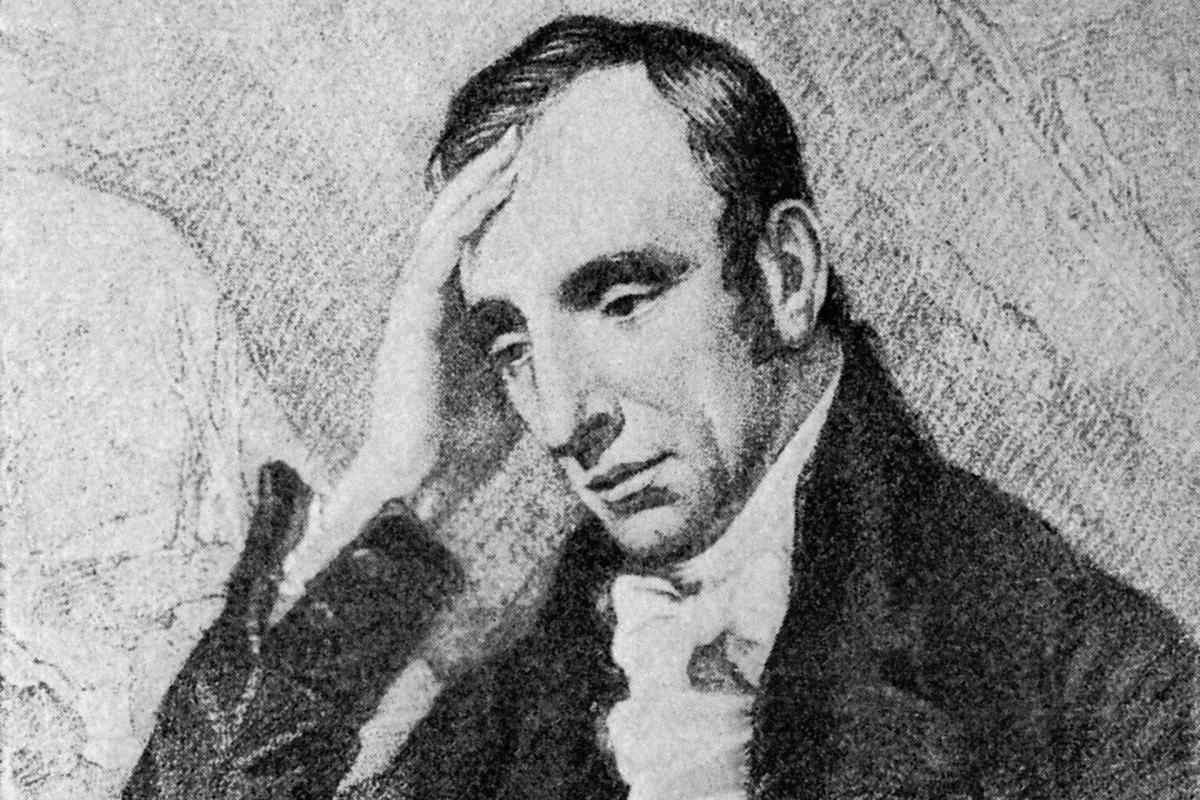
Conventional wisdom dictates that poetry must sound grand, elevated, and deliberately distant from everyday speech. Readers often expect verse to arrive draped in ornate, specialized vocabulary, an exclusive register reserved for high art. Yet in the landmark 1800 Preface to Lyrical Ballads, William Wordsworth mounted a fierce, deliberate revolt against this exact expectation.
Collaborating with Samuel Taylor Coleridge, Wordsworth published the original Lyrical Ballads in 1798, an act that effectively heralded the dawn of British Romanticism. When Wordsworth added his manifesto-like Preface to the expanded 1800 edition, he did not simply offer an introduction; he dismantled centuries of literary elitism. He argued that true art flourishes not in lofty, artificially distilled rhetoric, but in the authentic, vivid experiences of daily life. By insisting that poetry could emerge from humble people, familiar settings, and unvarnished cadence, Wordsworth exposed a fundamental aesthetic conflict: if genuine artistic power can spring from the mundane, what actually transforms an ordinary moment into something profound?
What Was Wordsworth Actually Arguing Against?
To understand** Wordsworth’s radical stance**, one must look at the prevailing literary conventions of the eighteenth century. Neoclassical poetry prized refined ornamentation, rigid stylistic decorum, and an elevated "poetic diction" carefully designed to set verse apart from common discourse. Literature had wrapped itself in an exclusive dialect of stock epithets and mythological flourishes, creating an artificial barrier between art and human experience.
**Wordsworth **mounted a devastating critique against this artificial separation. He rejected the notion that poetry required a specialized, aristocratic vocabulary to achieve aesthetic grandeur. Instead, he argued that writers should adopt the real language of men, drawing inspiration from rural communities where speech remains organically tied to basic human truths and the rhythm of nature.
It is crucial to note that Wordsworth was not advocating for careless prose disguised as verse. When readers ask, "Why did Wordsworth reject poetic diction?", the answer lies in his search for authenticity. He was not stripping poetry of imagery or emotional weight, but dismantling the dogmatic assumption that a poem must wear a uniform of contrived, high-minded terminology to be valid.
Why Did Wordsworth Make Ordinary People the Subject of Poetry?
Beyond changing the language of poetry, Wordsworth fundamentally altered its focus. He turned his gaze away from kings, mythic heroes, and aristocratic society, choosing instead to center rural workers, rustic life, and seemingly humble encounters. To a literary establishment accustomed to grand historical canvases, this deliberate elevation of marginalized, everyday lives felt shocking.
Wordsworth believed that primary human passions exist in a state of greater simplicity and raw purity within humble circumstances. Away from urban pretense, essential emotions—love, grief, resilience, and awe—could be observed with unfiltered clarity. In poems like "The Solitary Reaper," a chance encounter with a Highland woman singing a song in a language the speaker does not even understand becomes a moment of immense beauty and existential resonance. The poem demonstrates that a modest, passing moment carries immense emotional weight when met with genuine attentiveness.
By centering** the humble and the everyday**, Wordsworth challenged the core tenets of Romanticism. He asserted that human dignity and profound emotion are not exclusive privileges of the educated elite. A solitary worker in a field or a child speaking of her deceased siblings in "We Are Seven" carries as much philosophical significance as any classical hero.
“Emotion Recollected in Tranquillity”: Why Does Poetry Begin After the Experience?
Perhaps the most enduring contribution to** William Wordsworth** poetic theory is his famous definition of verse as the spontaneous overflow of powerful feelings, paired with his critical caveat that it takes its origin from emotion recollected in tranquillity. This concept bridges the gap between raw feeling and deliberate artistic craft through a carefully balanced two-stage creative process. First, an individual undergoes an intense, immediate emotional experience in the physical world. Later, in a quiet moment of reflection, the mind revisits that memory, allowing the original feeling to be contemplated, purified, and reconstructed through the power of imagination.
Understanding what does emotion recollected in tranquillity mean requires recognizing that poetry, for Wordsworth, is never an uncontrolled emotional outburst rendered in real-time. Direct experience is often too chaotic, visceral, or overwhelming to be fully understood as it unfolds. Memory acts as an essential artistic filter, stripping away distracting noise and illuminating the deeper existential meaning hidden within the moment. Through quiet reflection, the poet uses imagination not to fabricate a false reality, but to translate fleeting lived experience into lasting, resonant art.
Did Wordsworth Really Make Poetry More Ordinary?
Despite his radical arguments, a fascinating tension exists between Wordsworth's view of poetry and his actual practice. While he championed** "ordinary language,**" his poems are far from casual transcriptions of street speech. They are exquisitely structured compositions, relying on meter, rhythm, and carefully orchestrated literary devices.
This contradiction raises an enduring aesthetic question: can language ever remain truly ordinary once it is selected, arranged, and immortalized within a literary frame? The act of framing a moment in verse inherently elevates it. Wordsworth did not eliminate artifice; rather, he repurposed poetic craft to serve human reality instead of aristocratic tradition.
Wordsworth’s legacy lies in this very balance. By challenging inherited literary conventions, he expanded the horizons of English literature forever. He proved that art does not derive its value from grandiose subjects or precious phrasing, but from the depth of perception and emotional honesty brought to the page.
Why Does the Preface to Lyrical Ballads Still Matter?
Centuries later, the core arguments of the* Preface to Lyrical Ballads *remain strikingly vital. Modern culture still wrestles with questions about whose stories deserve space in art, which voices carry literary authority, and whether quiet, personal moments hold value in a world obsessed with sensational spectacle.
Wordsworth’s manifesto reminds us of the transformative power of attention. It validates the quiet, unglamorous aspects of human existence—the solitary walks, the brief conversations with strangers, the quiet landscapes revisited after years of absence—as rich terrain for artistic exploration.
By questioning what Wordsworth argues in the Preface to Lyrical Ballads, we discover a framework that extends far beyond nineteenth-century literary debates. He demonstrated that the profound rarely announces itself with fanfare; more often, it hides inside the unremarkable moments we so easily overlook.
Perhaps the Ordinary Was Never Ordinary
Ultimately, Wordsworth did not merely simplify verse; he fundamentally redefined what makes something worth writing about. His work suggests that the boundary separating the mundane from the extraordinary is not a property of the world itself, but a reflection of how closely we choose to look.
By stripping away the rigid mask of elevated poetic diction, he invited readers to discover majesty within the familiar. If poetry does not need extraordinary people, extraordinary events, or extraordinary language, perhaps Wordsworth was changing not poetry itself, but our idea of what is worth paying attention to.